
概览
Material Planning for an XDR 800G Fabric
Plan the upgrade around port architecture, cooling, and management connectivity.
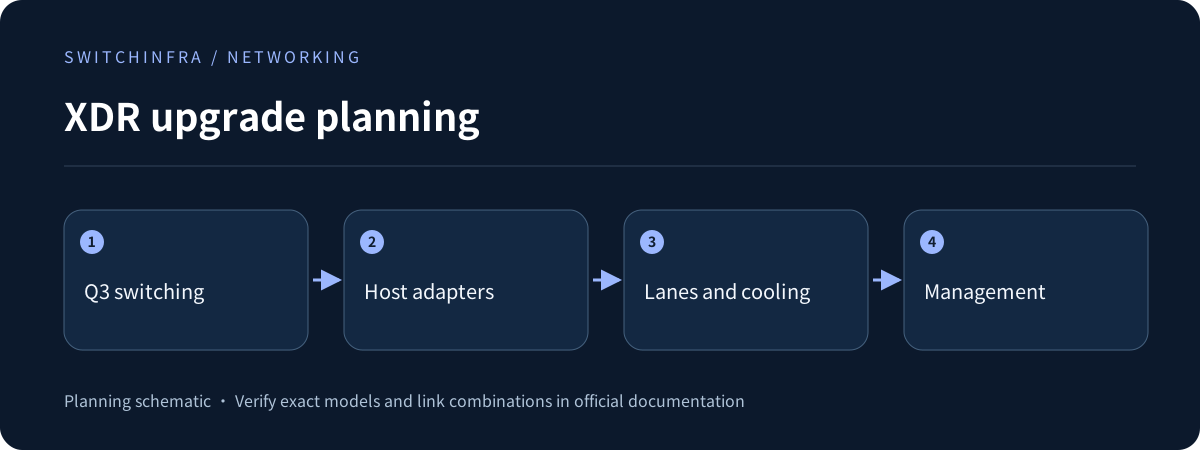
Define the migration boundary
Separate new compute endpoints from infrastructure that must remain. XDR, NDR, and Ethernet describe different operating configurations; an 800G label alone does not establish interchangeability. Verify Q3200, Q3400, and other Q3 variants against their own chassis, port, and cooling documentation.
Build an endpoint matrix
For every link, record both devices, physical connectors, lane count, lane rate, protocol, and module cooling format. Use ConnectX-8, ConnectX-9, and XDR catalog entries as research starting points. A newer component is not automatically a drop-in replacement for an existing host or switch.
Plan installation materials
Separate switching, host adapters, interconnects, management links, power, and mounting parts. Match the ordering suffix to AC, DC, busbar, and cooling requirements. CPO systems need their own optical connectivity and external-laser maintenance plan; do not apply a pluggable-transceiver quantity template to them.
Validate before migration
Build a small validation domain, establish management access, and test link and application behavior before moving racks in stages. Record mixed-generation port settings and a rollback procedure. Retain the version of the validated configuration and assess performance under the actual deployment conditions.
咨询专家
Plan your configuration
Share both endpoint part numbers, link requirements, and installation conditions. Related products are selection references, not a certified configuration.