
概览
Planning an NDR 400G Cluster Fabric
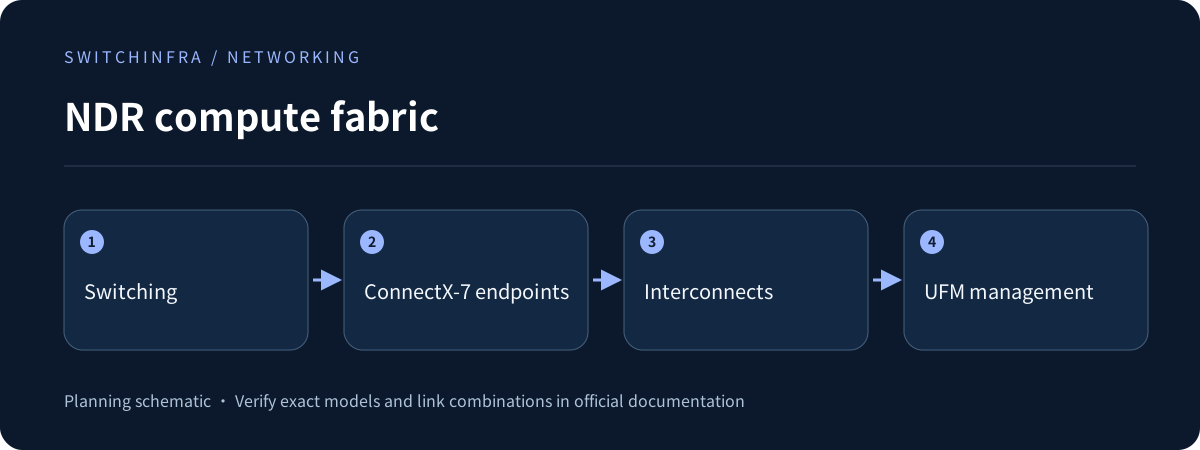
Build one link schedule that connects host interfaces, switch cages, interconnects, and management.
Use case
Use this workflow when building or expanding an NDR InfiniBand compute fabric. Record node count, active fabric ports per node, target link rate, and rack placement. Plan storage, external access, and out-of-band management separately. GPU count alone does not determine the number of network links.
Material roles
Compare QM9700 and QM9790 management and port requirements, then identify a ConnectX-7 ordering variant for the required protocol. Select an exact DAC or ACC for short connections; identify both endpoint modules and the fiber assembly for optical links. List UFM hardware and software entitlements separately.
Quantity method
Let H equal node count multiplied by active ports per node. Size switching from usable logical ports after reserving uplinks and redundancy. Count breakout assemblies from the supported port map. An OSFP cage does not always represent one independent 800G link. A conventional single-port optical connection uses two endpoint modules and one fiber path; twin-port modules require a channel-level count.
Acceptance
Maintain a port-to-port schedule with firmware, drivers, link mode, FEC, cable part number, and length. Test link establishment, error behavior, representative traffic, and recovery. Related products are evaluation candidates, not a certified bill of materials; confirm the exact combination against a versioned compatibility list and project tests.
咨询专家
Plan your configuration
Share both endpoint part numbers, link requirements, and installation conditions. Related products are selection references, not a certified configuration.